A real Surrey stream
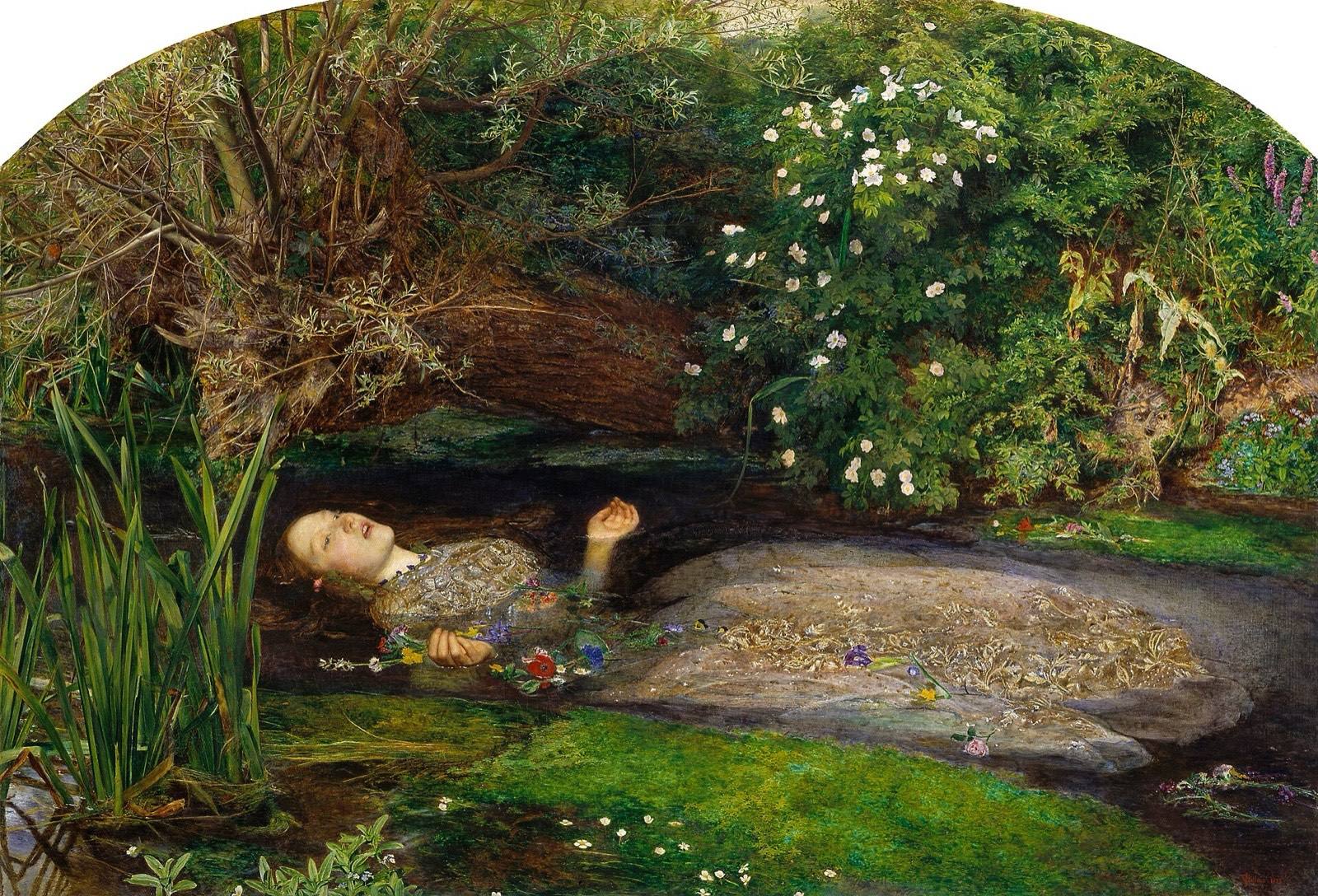
The winding water behind Ophelia is not invented: it is the Hogsmill River in Surrey, where Millais painted on site for months before Siddal ever stepped into a bathtub to model the figure.
 GajimaruClassics.
Preferences stay on this device. Reveal a painting without changing them.
John Everett Millais · 1851
painting
Select a detail to locate it.
Millais painted the riverbank beside the Hogsmill in Surrey before adding Ophelia in his London studio. Elizabeth Siddal posed in a water-filled bath. The scene draws on Shakespeare’s account of her drowning, with flowers taken from the play and Victorian symbolism.
The flowers deserve individual attention. Millais’s close description of the riverbank follows the Pre-Raphaelite commitment to studying nature. Compare that botanical precision with the figure floating among it.
1851
Tate Britain
The winding water behind Ophelia is not invented: it is the Hogsmill River in Surrey, where Millais painted on site for months before Siddal ever stepped into a bathtub to model the figure.
The Pre-Raphaelites prized truth over invention, so Millais worked from real flowers and a real riverbank rather than composing from memory. He spent about five months at the water's edge, painting so exactly that blooms from different seasons ended up side by side in the same picture.
Many of the blooms scattered near her hands are not decorative filler: most were painted either because Shakespeare names them in Ophelia's death scene, or for their own meaning in the Victorian language of flowers, where every bloom stood for an idea.
1851. Millais walks the banks of the Hogsmill River in Surrey and begins painting Ophelia's landscape entirely outdoors, before her figure exists on the canvas at all.
For about five months he paints on site, so patient and exact that flowers from different seasons end up blooming together in the same picture.
Back in his London studio, Elizabeth Siddal lies for hours in a bathtub of water, in an antique dress, so Millais can study exactly how a drowning woman would look.
Around her on the water Millais paints flowers that Shakespeare himself names in Ophelia's death scene, and others chosen for their own old meanings.
The Pre-Raphaelites' whole idea was to paint the world exactly as it looked, not as tradition said it should: real flowers, a real river, a real model, studied so closely that even a bathtub could stand in for a drowning stream.