 GajimaruClassics.
 Dracula
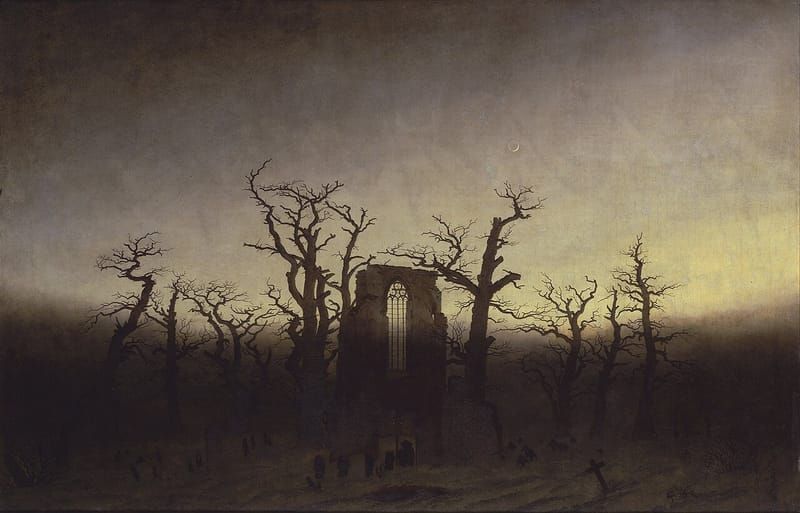
On the coverAbbey in the Oakwood, Caspar David Friedrich, 1809–10
Dracula
A young solicitor’s trip to a Carpathian castle unleashes an ancient predator on England, and a small band armed with science, faith, and folklore must hunt him down. Told entirely through letters, diaries, and clippings.
Character notes and context for the chapter you’ve read.
The book that built the modern vampire, and far creepier and more propulsive than its countless imitators. Told in letters and diaries, it reads like a case file you can’t put down.
Folklore in this book
The Grove · Slavic folkloreThe witches, water-spirits, and firebirds of the Russian and Slavic tales, painted by Ivan Bilibin, Viktor Vasnetsov, and the golden age of Russian illustration.Baba Yaga · Koschei · Vasilisa the Beautiful · The Firebird and 16 moreEnter the realm →SettingTransylvania & England, 1890s
Late-Victorian Britain believed in progress, typewriters, blood transfusions, train timetables, and was secretly terrified of everything ancient and foreign creeping back in. Science and superstition share these pages.
On screen & beyond
- Tod Browning’s film with Bela Lugosi (1931)
- Francis Ford Coppola’s film (1992)
- BBC / Netflix series (2020)