A refuge at Saint-Rémy
In May 1889 Van Gogh entered the asylum of Saint-Paul-de-Mausole, near Saint-Rémy-de-Provence, for treatment. He painted Irises there that same year.
 GajimaruClassics.
Preferences stay on this device. Reveal a painting without changing them.
Vincent van Gogh · 1889
painting
Select a detail to locate it.
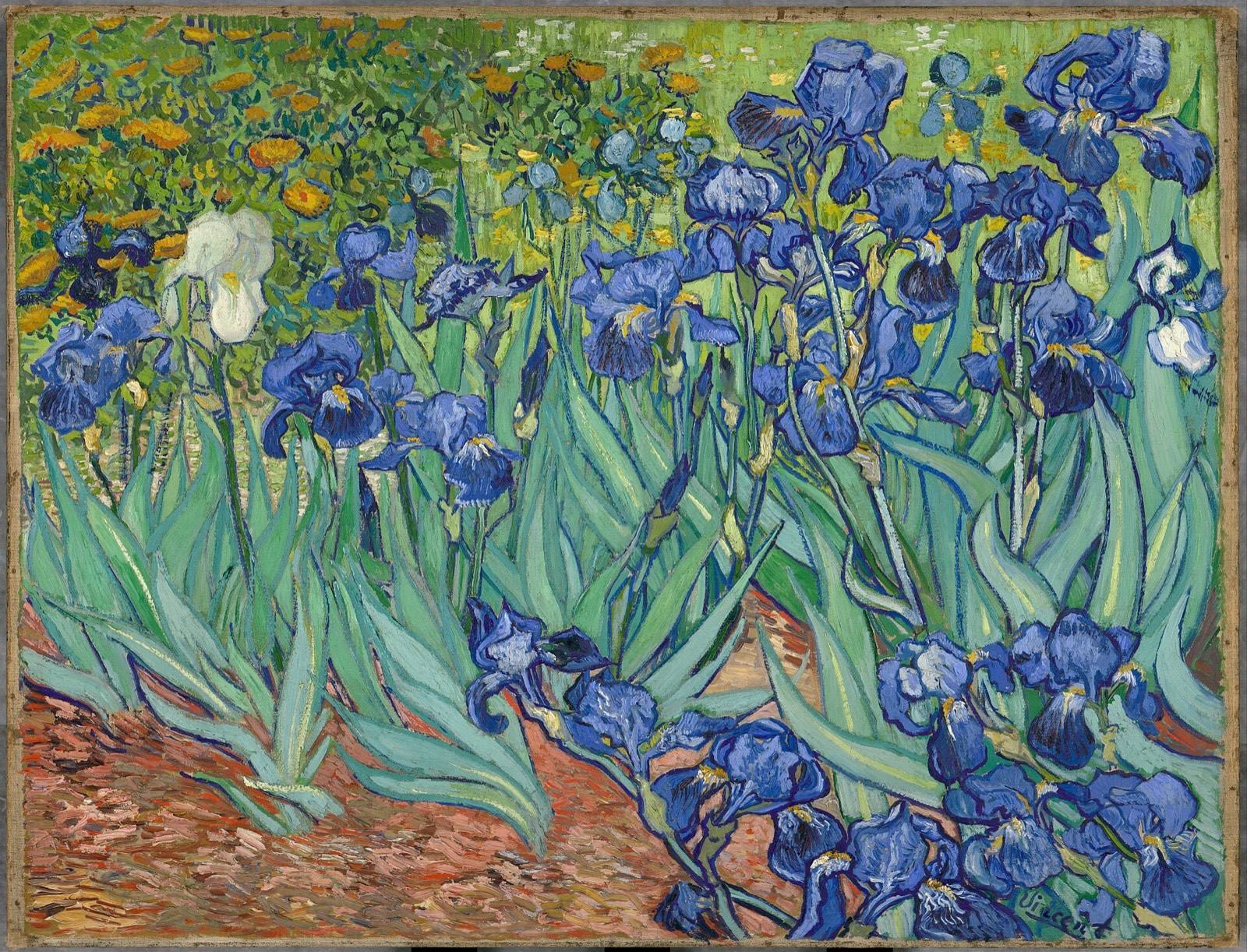
Van Gogh painted Irises in 1889, the year he entered Saint-Paul-de-Mausole near Saint-Rémy for treatment. Theo exhibited it in Paris that autumn and praised its air and life. The painting belongs to the Getty Museum.
The strokes have a physical thickness: paint rises from the canvas. This build-up, called impasto, makes brushwork part of the surface you see, giving the flowers a sense of movement.
1889
Getty Center
In May 1889 Van Gogh entered the asylum of Saint-Paul-de-Mausole, near Saint-Rémy-de-Provence, for treatment. He painted Irises there that same year.
That September, Theo placed Irises in the Société des Artistes Indépendants show, alongside Van Gogh's Starry Night Over the Rhône. He wrote to his brother that it looked extremely well, a fine study full of air and life.
Van Gogh built the paint up thickly across the canvas, in strokes that stand proud of the surface. Conservators who studied the picture under magnification found that same heavy paint sitting over a white ground layer, typical of his canvases from this period at Saint-Rémy.
1889. In May, Van Gogh entered the asylum of Saint-Paul-de-Mausole, near Saint-Rémy-de-Provence, and that year he painted Irises there.
September 1889. Theo hung the picture in Paris, at the Société des Artistes Indépendants, next to Starry Night Over the Rhône.
It drew notice. Theo wrote to Vincent that it looked extremely well, calling it a fine study, full of air and life.
Today the canvas hangs in the J. Paul Getty Museum, in Los Angeles.
Van Gogh piled the paint on so it stood up from the canvas instead of lying flat, in strokes thick enough that conservators can still see their ridges under a microscope. That thick, energetic brushwork is what gives the picture its pulse of movement.