



A cupid stands watch
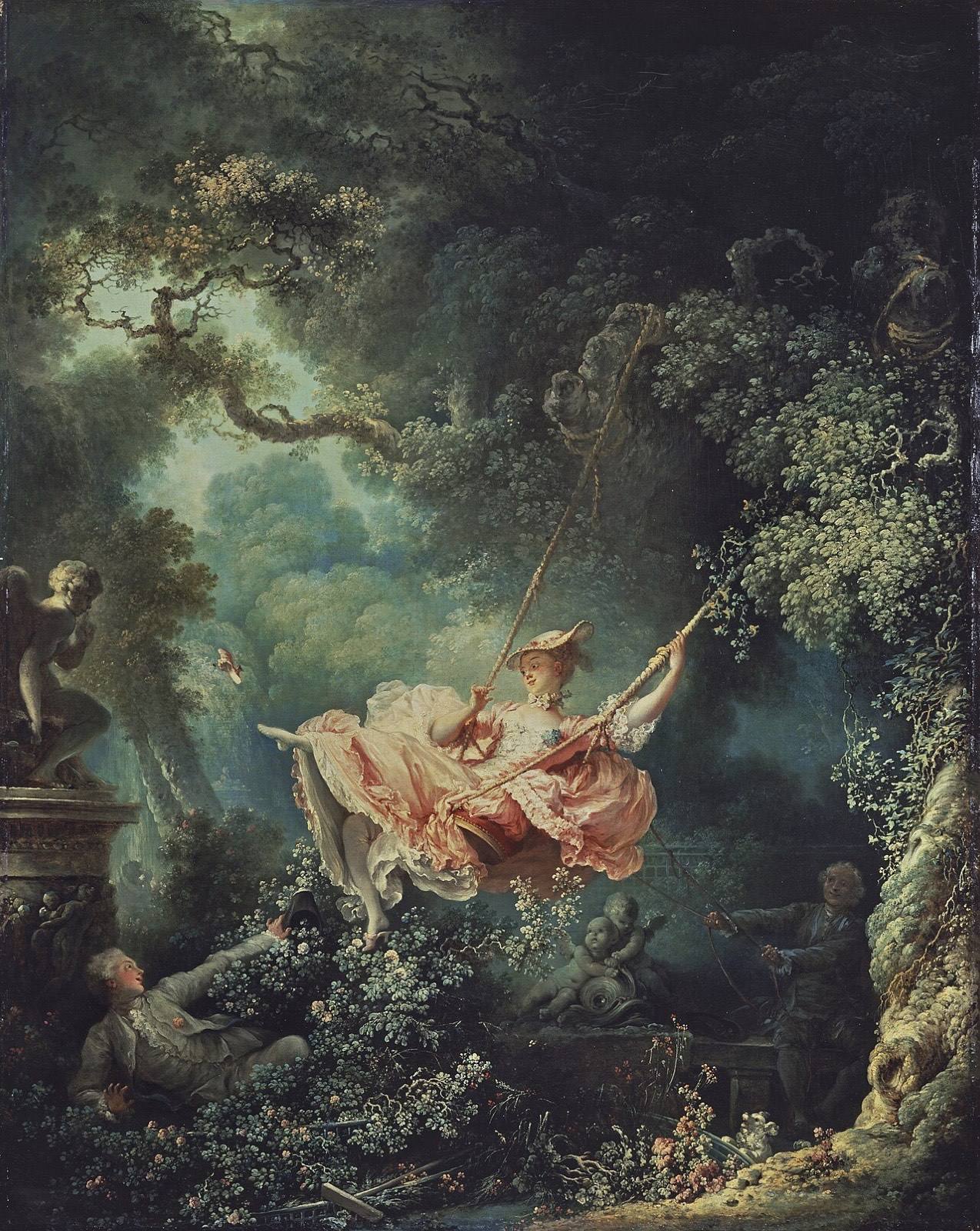
A statue of a cupid appears in the scene, above the lady as she swings. The patron had asked to be placed where he could watch her legs as she swung, and that request still sits at the centre of the picture.
 GajimaruClassics.
Preferences stay on this device. Reveal a painting without changing them.
Jean-Honoré Fragonard · 1760s
painting
Select a detail to locate it.
1760s
Wallace Collection
An account of The Swing’s commission describes a patron who wanted to see his mistress’s legs as she swung above him. Fragonard painted the picture around 1767. Its arrangement of spectators makes looking part of the subject.
The cupid statue adds another presence to the scene. The man pushing the swing occupies a role the patron’s reported request had given to a bishop. These substitutions belong to the painting’s Rococo wit.
A statue of a cupid appears in the scene, above the lady as she swings. The patron had asked to be placed where he could watch her legs as she swung, and that request still sits at the centre of the picture.
The Swing is associated with Rococo’s playful manner. It belongs to the Wallace Collection in London.
The commission account describes an unnamed courtier requesting a view of his mistress’s legs as she swung, with a bishop pushing her. The story explains the painting through the patron’s desired viewpoint.
In that account, Gabriel-François Doyen declines the commission and recommends Fragonard. The finished painting gives the role of pushing the swing to a layman.
Around 1767. A reported commission asks for the patron’s mistress on a swing, viewed from below.
In the commission account, Doyen declines the request and recommends Fragonard.
Fragonard paints a layman pushing the swing in the role the patron had proposed for a bishop.
The painting belongs to the Wallace Collection in London.
The Swing’s playful treatment of the commission belongs to Rococo. The cupid statue and the substituted layman give the scene its particular wit.