
GajimaruClassics.
Viewing preferencesShown as painted
Veil paintings showing

Preferences stay on this device. Reveal a painting without changing them.

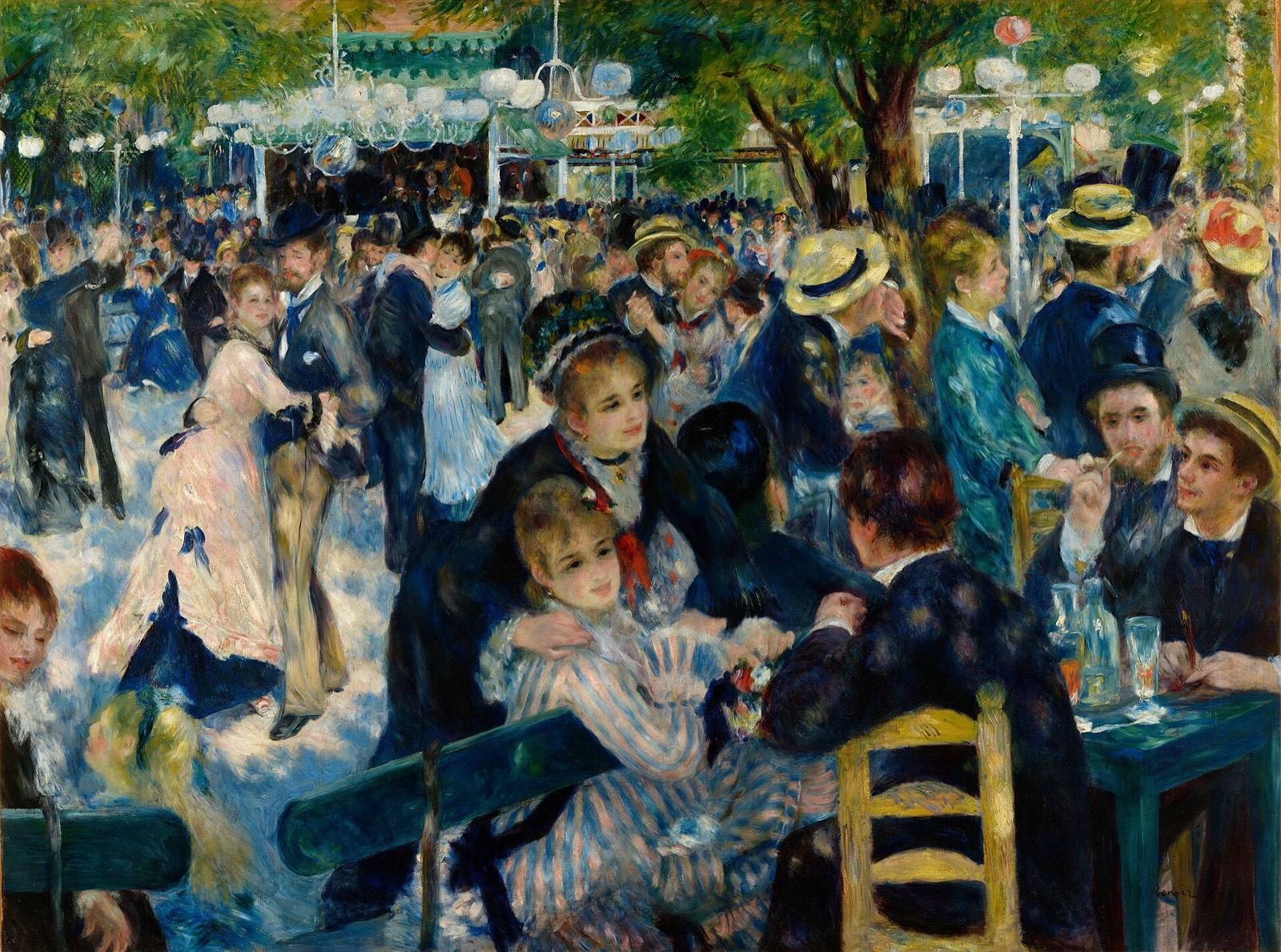
Bal du moulin de la Galette by Pierre-Auguste Renoir

Bal du moulin de la Galette

Pierre-Auguste Renoir · 1876

painting

Look closer

Select a detail to locate it.

Renoir paints a Sunday dance at the Moulin de la Galette in Montmartre, where local people gathered to eat, drink and dance. Shown publicly in 1877, the picture belongs to the Musée d’Orsay.

Details

Dappled light breaks across the crowd’s clothes and faces. The young men at the foreground table include Renoir’s friends. Follow the patches of light between them and the dancers: they give a crowded gathering its visual rhythm.

Where it hangs

Musée d'Orsay

In context

A dance floor for the neighbourhood

The Moulin de la Galette stood on the Butte Montmartre, then still a village-like hilltop on the edge of Paris. On Sunday afternoons it opened its garden to anyone who wanted to dance, drink and eat the galettes it was named for, drawing shopgirls, clerks and artists alike.

Friends, not professionals

Renoir filled the foreground with people he actually knew rather than paid studio models. The young men drinking at the tables on the right were his own circle of friends, brought along to pose for an afternoon.

First shown in 1877

Renoir finished the painting in 1876 and put it before the public the following year, when it was still a fairly new thing for artists to exhibit outside the official Salon.

From Montmartre to the Musée d'Orsay

The painting now hangs in the Musée d'Orsay in Paris, the museum built for exactly this generation of nineteenth-century French painting.

The story

  1. 1876. Renoir set up to paint a real Sunday afternoon at the Moulin de la Galette on the Butte Montmartre, gathering his own friends around the tables instead of hiring models.

  2. He worked to catch the sunlight itself, breaking through the trees into small moving spots of colour across the dancers below.

  3. 1877. The finished painting was shown to the public for the first time.

  4. It eventually found its way to the Musée d'Orsay, where it hangs today.

A way of seeing

Impressionist light

Instead of painting even, studio-like daylight, Renoir broke sunlight into small separate patches of colour scattered across the scene, so the light itself seems to move.