A poor day's hunting
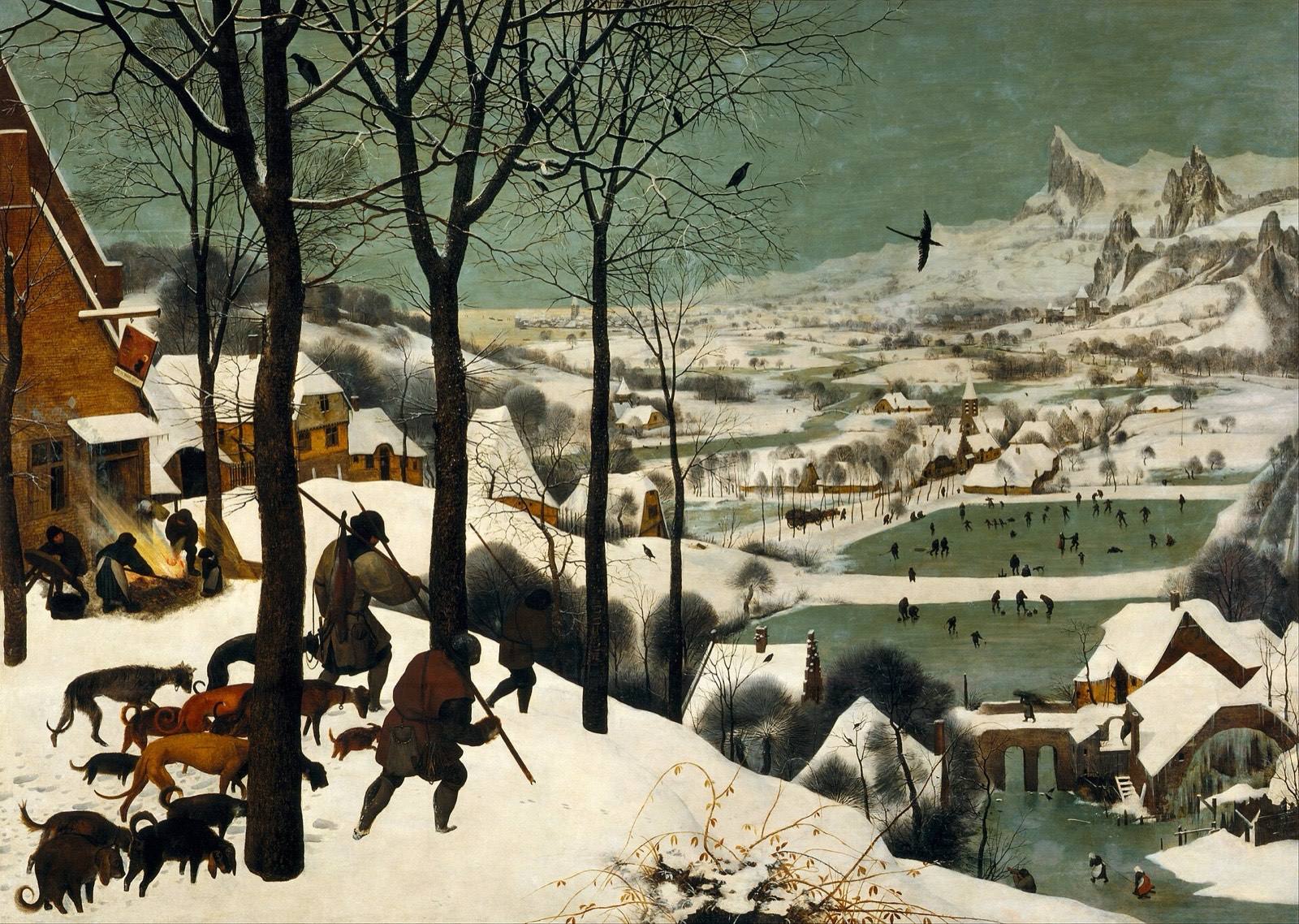
The three hunters trudge home along the ridge with barely any game to show for the day, their dogs sharing their weary mood. Below them the village waits in the valley, life going on regardless of the hunt's poor luck.
 GajimaruClassics.
Preferences stay on this device. Reveal a painting without changing them.
Pieter Bruegel the Elder · 1565
painting
Select a detail to locate it.
Three hunters return with little game, descending towards a village in the snow. Nearby, people singe a pig outside an inn. Bruegel painted this winter scene on oak in 1565; it belongs to Vienna’s Kunsthistorisches Museum.
Dark trees, dogs and figures cut into muted snow and pale green ice. The restricted palette carries the winter mood across the whole scene. Let the eye travel from the ridge into the valley before settling on a detail.
1565
Kunsthistorisches Museum
The three hunters trudge home along the ridge with barely any game to show for the day, their dogs sharing their weary mood. Below them the village waits in the valley, life going on regardless of the hunt's poor luck.
Down in the valley below the ridge, an inn keeps its own fire going: a child watches while others prepare to singe a pig for the table. It is a small, warm scene in an otherwise bitterly cold picture.
Bruegel allows himself only a few cold colours: muted whites and greys, pale green sky and ice, with every tree, dog and huddled figure pushed toward black. The effect works on the eye as a whole, not through any single detail.
1565. Working in oil on a panel of oak, Pieter Bruegel the Elder completes the picture.
Today, the panel hangs in Vienna's Kunsthistorisches Museum.
By allowing himself only a few muted, cold-toned colours, whites and greys and pale green, and pushing every living thing toward black, Bruegel makes the whole picture feel cold before you notice a single detail in it.