

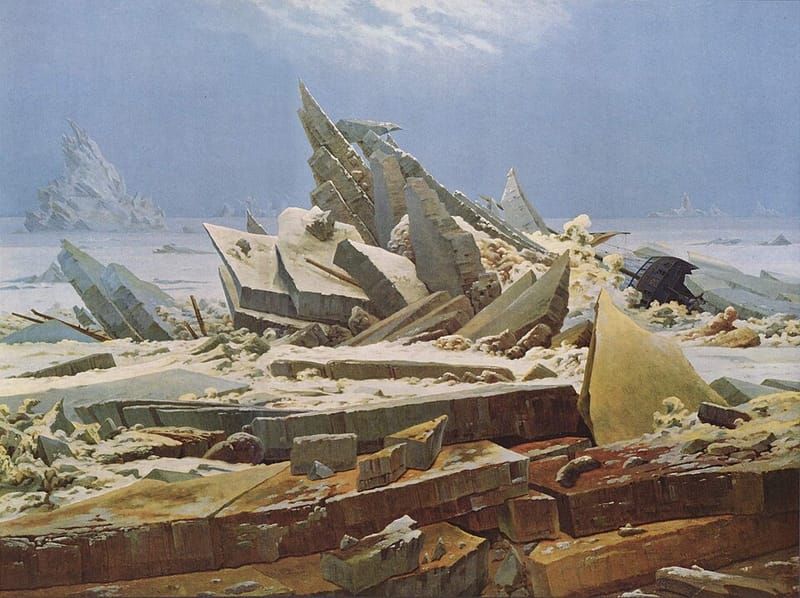




A ship under the ice
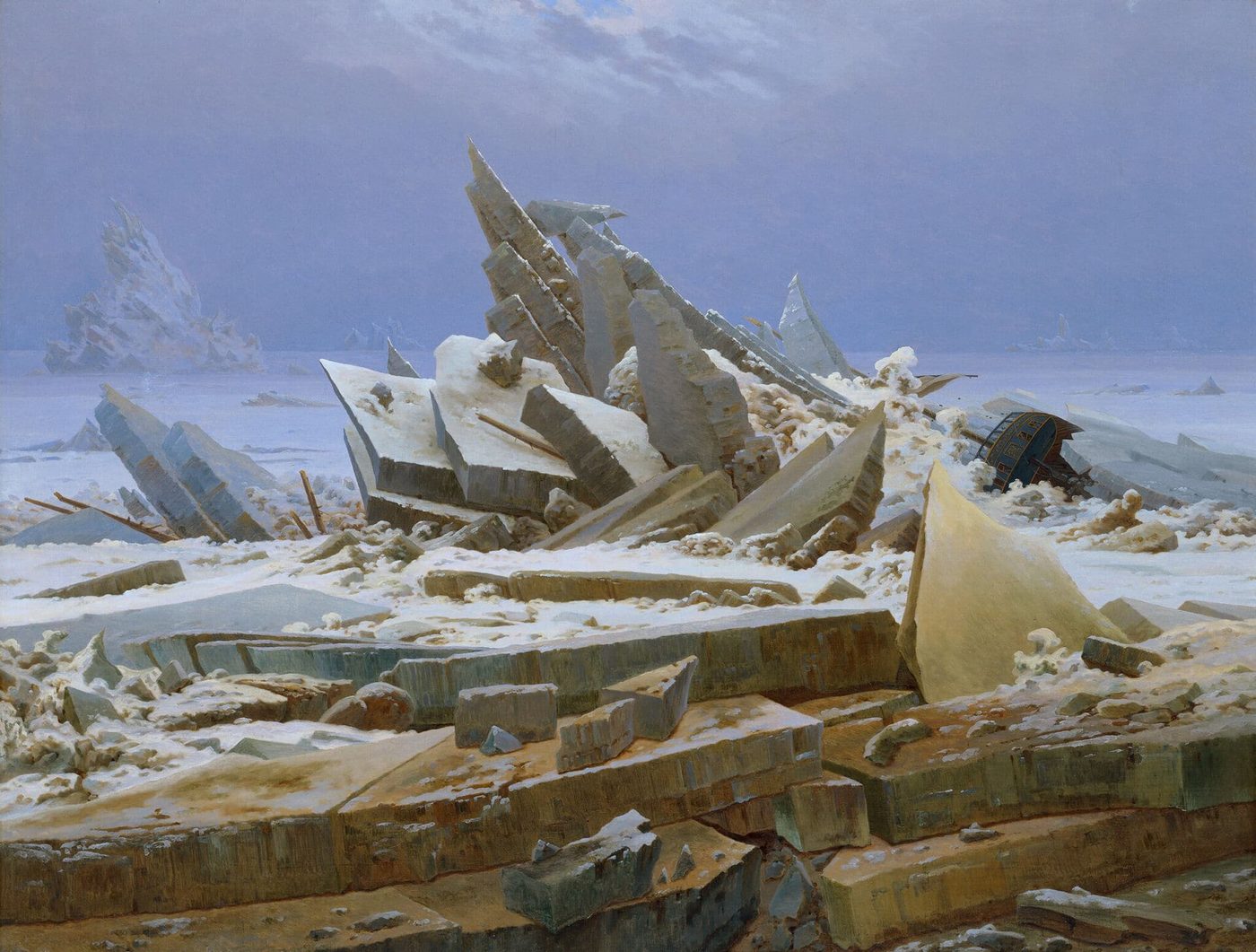
A wrecked ship lies almost buried by the ice on the right. The painting shows nature overwhelming human ambition.
 GajimaruClassics.
Preferences stay on this device. Reveal a painting without changing them.
Caspar David Friedrich · 1823–24
painting · Romanticism
Select a detail to locate it.
Friedrich finished The Sea of Ice in 1824. A wrecked ship lies almost buried by the ice on the right, and at the centre great slabs of ice are heaped into a towering mass. The painting shows nature overwhelming human ambition, and Friedrich was still unable to sell it when he died in 1840.
Start with the wreck on the right, then let your eye climb the slabs of ice at the centre. The Romantics had a word for the thrill of something vast and terrible, the sublime, and scholars have often discussed this painting in those terms.
1823–24
Hamburger Kunsthalle
A wrecked ship lies almost buried by the ice on the right. The painting shows nature overwhelming human ambition.
At the centre, great slabs of ice are heaped into a towering mass.
The sublime was the Romantic idea that vast, terrible things in nature can stir the strongest feelings, a thrill mixed with fear. Scholars have often discussed this painting in those terms.
He finishes it in 1824.
When Friedrich dies in 1840, it is still unsold.
The Romantics had a word for the thrill of something vast and terrible: the sublime. Stand in front of this one and test it: a scene of nature overwhelming human ambition.
Frankenstein opens in this world: letters from an explorer sailing into the far north toward the Pole.