A frigate lost off West Africa
In 1816 the frigate Méduse ran aground on the Arguin sandbank off the West African coast. When her people could not free the ship, close to 150 of them crowded onto a hastily built raft.
 GajimaruClassics.
Preferences stay on this device. Reveal a painting without changing them.
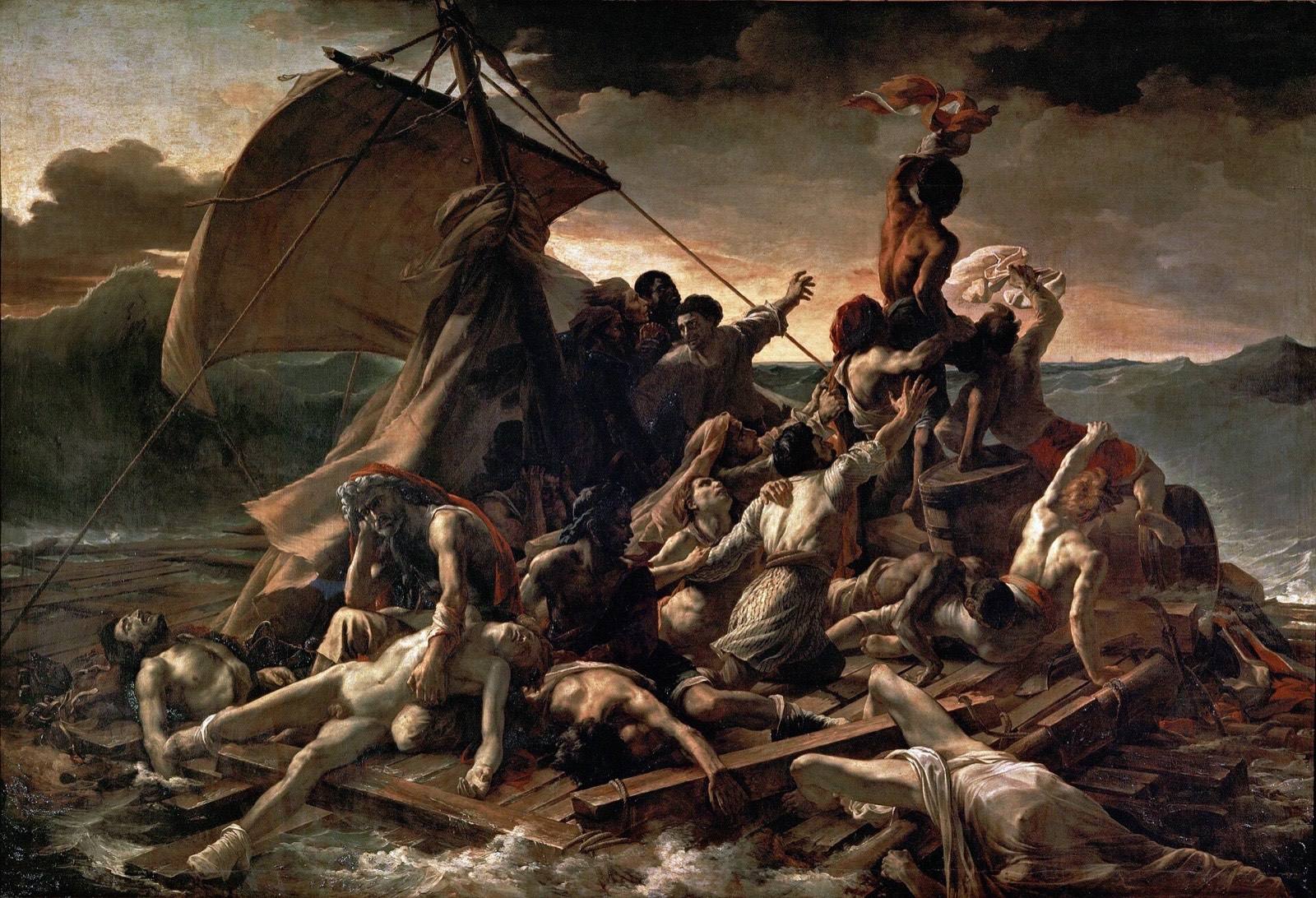
Théodore Géricault · 1819
painting
DeathRead the context
Select a detail to locate it.
After the Méduse ran aground in 1816, about 150 people boarded a makeshift raft. The boats meant to tow it cut it loose; fifteen were alive when rescue came. Géricault turned the disaster into a canvas shown at the Paris Salon of 1819.
The distant rescue ship is small enough to overlook. Follow the survivors’ upward gestures towards it. Preparatory studies of bodies preceded a canvas nearly five metres high and more than seven wide, making the raft’s figures meet the viewer at an imposing scale.
1819
Musée du Louvre
Room 700
In 1816 the frigate Méduse ran aground on the Arguin sandbank off the West African coast. When her people could not free the ship, close to 150 of them crowded onto a hastily built raft.
The boats that were meant to tow the raft to shore cut it free instead, leaving it to drift alone. Days later the brig Argus found it, and only fifteen of those aboard were still alive.
Géricault rented a studio and worked there for months to complete the huge canvas. He made many preparatory drawings and painted studies first, among them a study of arms and legs done by lamplight.
Painted for the 1819 Paris Salon, the picture found no buyer while Géricault was alive. The Louvre bought it in 1824 at the public sale of his estate, and it has hung in the Department of Paintings since.
The Louvre displays the picture in its Romantic-era rooms. Géricault's handling of motion, dramatic light and raw feeling has long marked him as a central figure of French Romanticism.
1816. The frigate Méduse runs aground on the Arguin sandbank off the West African coast.
Unable to free the ship, her people build a hastily made raft and crowd close to 150 onto it.
The boats meant to tow the raft to shore cut it loose instead, and it drifts alone.
The brig Argus finds the raft at last. Only fifteen of those aboard are still alive.
1819. Géricault, who has spent months on the picture in a rented studio, shows it at the Paris Salon.
1824. Unsold in his lifetime, the painting enters the Louvre at the sale of Géricault's estate.
Romanticism let painters give a real, recent disaster the scale and seriousness once kept for myth and history painting. The Louvre hangs Géricault's raft among its Romantic pictures, and his handling of motion, light and feeling has long marked him as a central figure of the movement.