A merchant and his wife
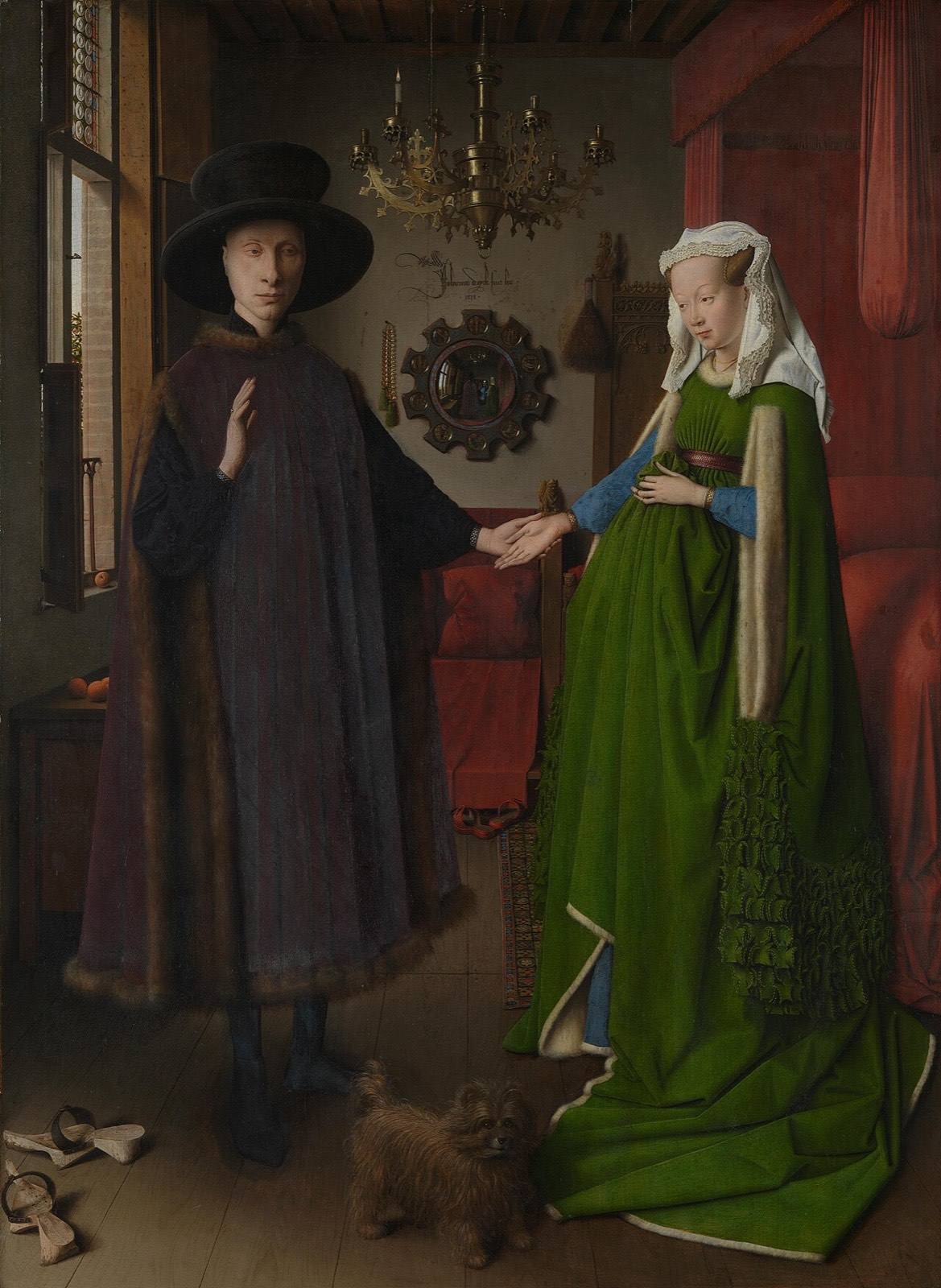
The panel is believed to show the Italian merchant Giovanni Arnolfini and his wife, in their home in Bruges. It is a full-length double portrait, and every object around them was chosen to display their wealth and standing.
 GajimaruClassics.
Preferences stay on this device. Reveal a painting without changing them.
Jan van Eyck · 1434
painting
Select a detail to locate it.
1434
National Gallery
A couple believed to be Giovanni Arnolfini and his wife stand hand in hand in a room furnished to display wealth. Above them, Van Eyck’s inscription announces that he was here in 1434. The once-familiar reading of the scene as a marriage ceremony is disputed.
The round mirror reveals two more figures at the doorway, one perhaps the painter. Minute details extend to the dog and discarded overshoes. Oil’s slow drying gave Van Eyck time to blend and rework the painted surfaces.
The panel is believed to show the Italian merchant Giovanni Arnolfini and his wife, in their home in Bruges. It is a full-length double portrait, and every object around them was chosen to display their wealth and standing.
Above the mirror, Van Eyck signs and dates the wall: Jan van Eyck was here, 1434. In its curve, two more figures stand in the doorway behind the couple, one of them perhaps the painter himself.
Oil dries slowly, giving Van Eyck time to blend colour and rework faces. Underdrawings preserve evidence of those revisions beneath the finely described surfaces.
A little dog stands watchful at their feet, often read as an emblem of fidelity. Behind them, one candle in the chandelier burns in daylight while another has burned out, and by the door the couple's outdoor shoes lie where they stepped out of them.
Early scholars read the scene as a marriage ceremony, though some modern art historians now doubt it. And though her gathered gown makes her look pregnant, she most likely is not.
Before he signed it, Van Eyck reworked the panel beneath the paint: oil's slow drying let him rework the faces as he went, as underdrawings later showed.
1434. Van Eyck signs and dates the panel above the mirror: Jan van Eyck was here.
1842. It is bought by the National Gallery in London.
Oil paint dries slowly. Van Eyck used the delay to blend colour into soft gradation and to rework details as he painted, on one of the oldest widely famous panels made this way.