Adam, at ease
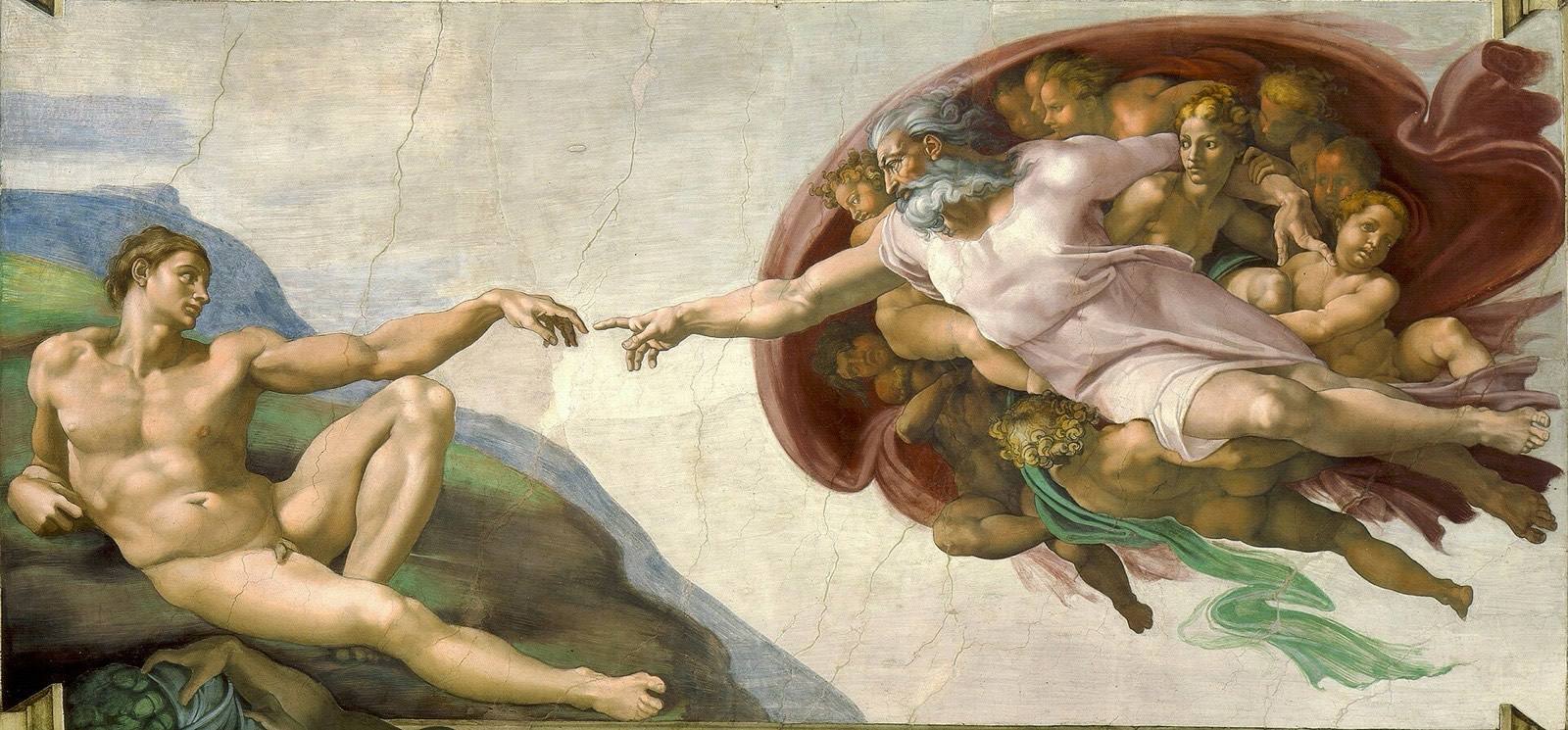
Adam reclines on the bare ground, his body loose and unhurried. Sources have long called this pose languid: there is no strain in it, no bracing, just the easy weight of a body at rest.
 GajimaruClassics.
Preferences stay on this device. Reveal a painting without changing them.
Michelangelo · 1511
fresco
Select a detail to locate it.
On the Sistine Chapel ceiling, Michelangelo paints Adam reclining on bare ground, his arm reaching towards God. A group of figures, often read as angels, gathers around God. Their reaching gestures echo one another.
Compare Adam’s relaxed body with the close grouping opposite him. The reaching arms bring these differently arranged bodies into one encounter. Adam’s languid pose makes the small movement of his hand especially noticeable.
1511
Vatican Museums
Sistine Chapel
Adam reclines on the bare ground, his body loose and unhurried. Sources have long called this pose languid: there is no strain in it, no bracing, just the easy weight of a body at rest.
Follow Adam's arm out to where it reaches toward God: his pose was deliberately built to echo God's own outstretched gesture. Michelangelo studied this reaching arm on paper before he ever painted it on the ceiling.
God does not arrive by himself: a group of figures, often read as angels, is gathered close around him, sheltered within his company.
Michelangelo painted The Creation of Adam in fresco, high on the ceiling of the Sistine Chapel, in the Vatican.
For Adam's reaching arm, he made a study on paper first, then carried the pose onto the plaster of the ceiling.
He set Adam reclining at ease on the ground, and God arriving close by, gathered with a group of figures around him.
The Creation of Adam is a fresco: Michelangelo painted it directly onto the ceiling of the Sistine Chapel, in the Vatican.